
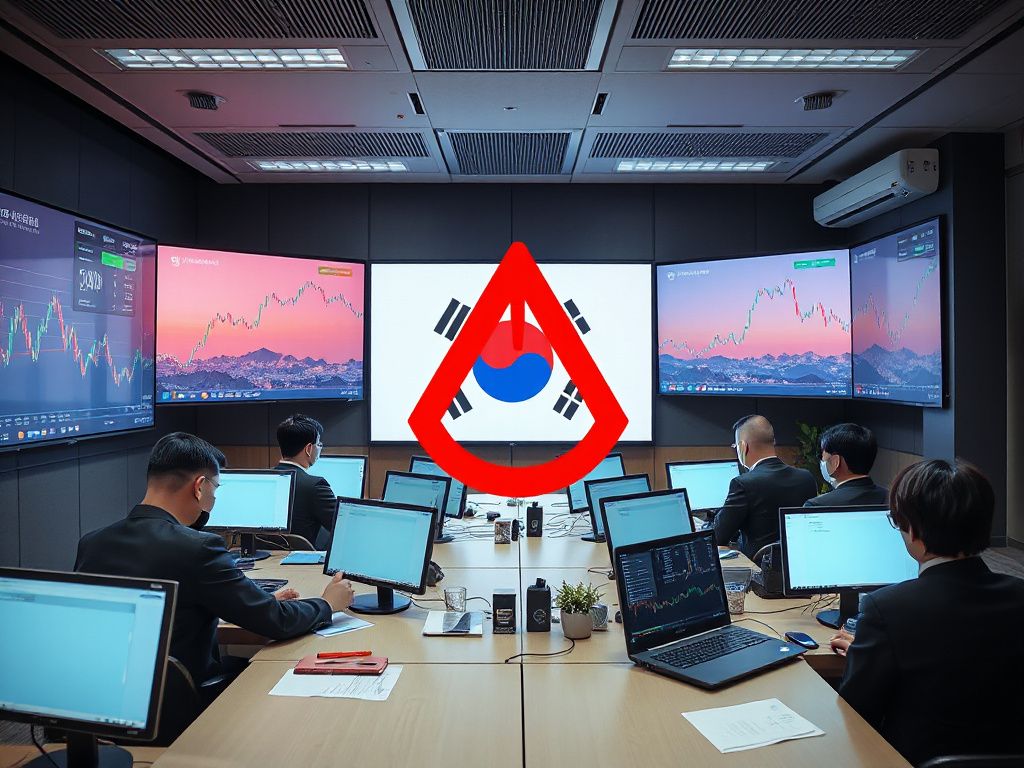
South Korea Tightens Crypto Oversight with Circuit Breaker Proposals and API Trading Scrutiny
On April 13, 2026 the Bank of Korea (BOK) formally introduced a review of systemic safeguards for digital assets in its 2025 Payment and Settlement Report, proposing the adoption of stock‑market‑style circuit breakers for domestic cryptocurrency exchanges. The move follows a dramatic February incident at Bithumb, where a promotional error generated roughly 60 trillion won in phantom Bitcoin and caused a sudden 17 percent price drop on the platform. By embedding the circuit‑breaker framework into the pending Digital Asset Basic Act, regulators hope to give exchanges a tool to pause trading when extreme volatility threatens market stability, mirroring mechanisms that have long protected equity markets.
However, the effectiveness of transplanting traditional finance rules into a 24/7, globally fragmented crypto ecosystem is hotly debated. Analysts from Tiger Research point out that crypto liquidity is spread across hundreds of venues worldwide, meaning a domestic‑only halt could create sharp price dislocations against offshore markets rather than contain them. Critics argue that a circuit breaker limited to South Korean exchanges might simply push traders to foreign platforms, amplifying arbitrage pressures and potentially increasing systemic risk. The core challenge, they say, is to design safeguards that reflect the unique structure of crypto markets—where assets trade continuously across borders—rather than copying stock‑exchange playbooks verbatim.
Adding another layer of regulatory pressure, the Financial Supervisory Service (FSS) warned that API‑driven trading now accounts for about 30 percent of South Korea’s crypto turnover, with some actors using automated tools to inflate volumes and manipulate prices. Investigations have uncovered tactics such as repeated small trades to simulate activity, spoofed limit orders to push prices upward, and coordinated multi‑account strategies that exploit thin order books. The FSS has pledged targeted probes into suspicious accounts and urged investors to stay clear of high‑frequency trading scripts shared online. Together with the BOK’s circuit‑breaker proposal, these actions signal a broader governmental effort to close loopholes, curb market abuse, and lay the groundwork for a more resilient crypto regulatory framework in South Korea.