
Bitcoin Mining Goes Green in 2026: Debunking the Energy‑Hog Myth
In 2026 the Bitcoin network is poised to shed its long‑standing reputation as an energy‑intensive “hog” thanks to a convergence of technological, economic, and regulatory forces. The latest halving event reduces the block reward, pressuring miners to optimise operating costs and accelerate the adoption of newer, more efficient ASIC generations that can deliver up to 9 J/TH or better, a dramatic improvement over legacy equipment. Research from Spark Money highlights that capital expenditure is increasingly directed toward hardware with lower power‑per‑hash ratios, shortening pay‑back periods and making obsolete machines financially unattractive. At the same time, the difficulty‑adjustment algorithm continues to smooth out short‑term fluctuations, allowing the network to maintain security while miners transition to greener power sources without jeopardising hashrate stability.
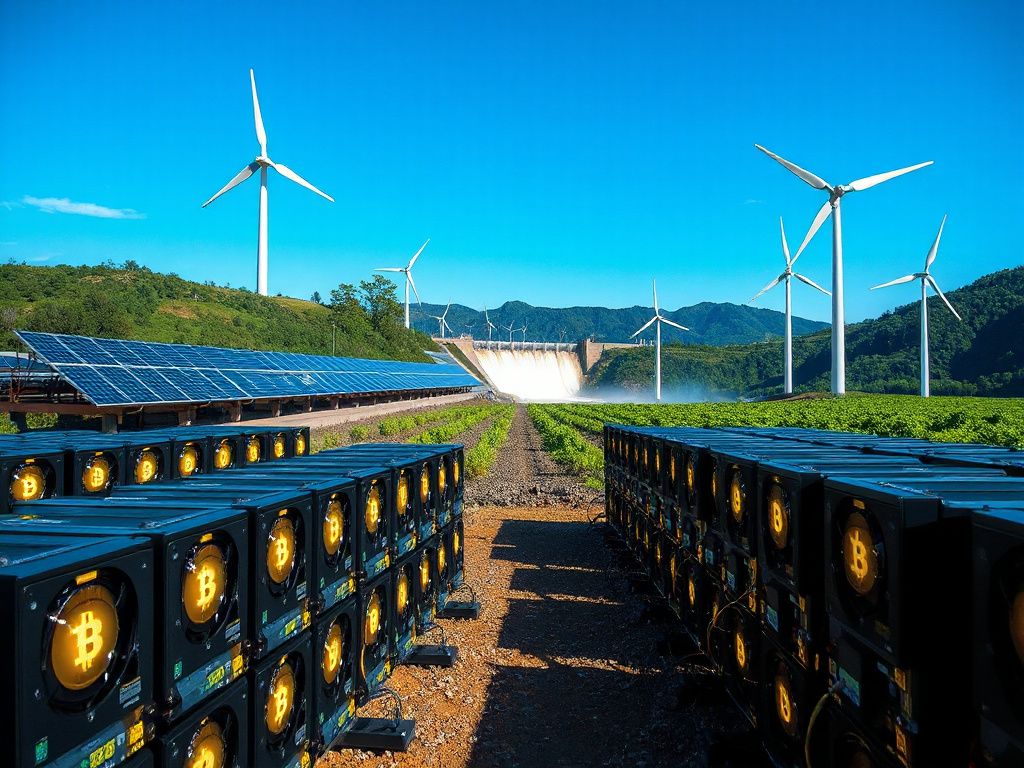
Renewable energy integration is no longer a niche experiment but a mainstream strategy for mining operations worldwide. Geographic shifts are evident as firms relocate to regions with abundant low‑cost, carbon‑free electricity—such as hydro‑rich locations in North America, wind corridors in Europe, and solar‑rich deserts in the Middle East. Off‑grid solutions, exemplified by hydro‑cooled miners like the SEALMINER A4 Ultra Hydro, enable operators to tap surplus renewable generation that would otherwise be curtailed, turning Bitcoin mining into a flexible grid‑balancing asset. Policy narratives that conflate data‑center power demand with Bitcoin mining are increasingly challenged by evidence that mining often consumes excess renewable capacity, thereby improving overall grid utilisation and even lowering wholesale electricity prices in some markets.
The economic model of Bitcoin mining is also evolving beyond block rewards toward a fee‑revenue‑driven future. As the subsidy from newly minted coins wanes, transaction fees are projected to constitute a larger share of miner income, incentivising the industry to support a healthier, higher‑throughput network that relies on sustainable energy. This transition aligns with broader ESG expectations, prompting institutional investors and utility regulators to view mining as a potential partner in grid stability rather than a liability. In sum, the combination of ultra‑efficient hardware, strategic geographic deployment, and a shifting revenue structure is rewriting the narrative: by 2026 Bitcoin miners are becoming one of the most energy‑conscious participants in the digital economy, proving that the “energy hog” label belongs to the past.