
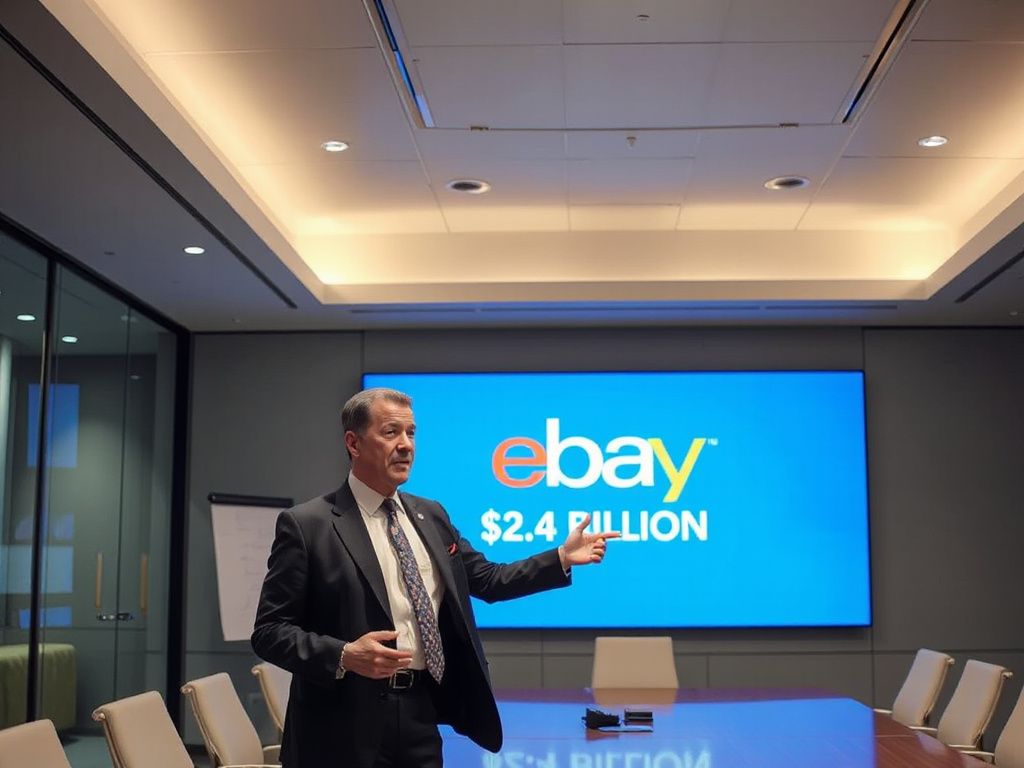
GameStop CEO Challenges eBay’s $2.4 Billion Marketing Spend Amid Ongoing Acquisition Tussle
On May 22, 2026, GameStop chief executive Ryan Cohen took to X to publicly question the efficiency of eBay’s massive $2.4 billion marketing budget. Cohen’s criticism was sparked by a newly posted senior role at eBay – “Senior Manager of Marketing Effectiveness” – which, according to the job listing (code R0074539), is tasked with “finding out where the money is going.” By highlighting this responsibility, Cohen implied that a company with such a sizable spend should already have the fundamentals of platform reliability under control, especially after a wave of seller complaints about account access and support failures. The tweet quickly gained traction, framing the debate not just as a dispute over a failed acquisition, but as a broader commentary on corporate transparency and the true impact of multi‑billion‑dollar advertising allocations.
The feud traces back to GameStop’s bold $56 billion cash‑and‑stock offer to acquire eBay, a proposal that valued the e‑commerce giant at roughly $125 per share. Backed by a confident financing letter from TD Securities promising up to $20 billion, the bid was meant to position GameStop as a strategic partner capable of revitalising eBay’s marketplace. However, eBay’s board, after consulting independent advisors, dismissed the offer as “neither credible nor attractive,” effectively ending the takeover attempt. In the days that followed, eBay permanently suspended Cohen’s seller account, citing “risk to the community.” The suspension, which prevented Cohen from listing GameStop‑branded merchandise such as store signs and carpet, was widely interpreted as a calculated publicity move that amplified the existing tension between the two companies.
Beyond the headline‑grabbing numbers, the episode underscores a shifting landscape where corporate marketing spend is increasingly scrutinised by competitors and regulators alike. eBay’s $2.4 billion allocation for fiscal 2025 reflects a broader industry trend of investing heavily in brand awareness, user acquisition, and data‑driven advertising. Yet, as Cohen’s pointed remark demonstrates, the efficacy of such spending is now measured against operational performance – from seller support to platform stability. For investors and market watchers, the GameStop‑eBay saga serves as a case study in how high‑profile acquisition bids, executive social‑media activity, and internal marketing roles can intersect to shape public perception and, ultimately, shareholder value.