
Federal Reserve’s New Direction and Its Immediate Impact on Crypto Markets
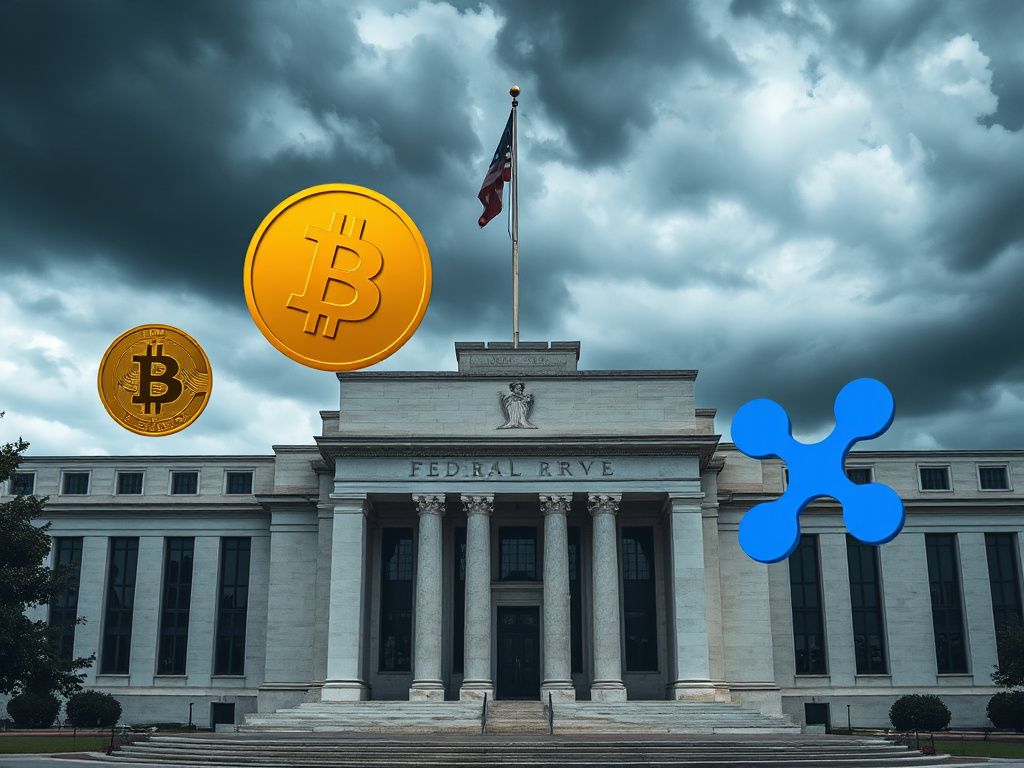
On June 17, 2026, newly appointed Fed chair Kevin Warsh concluded his inaugural FOMC meeting by leaving the policy rate unchanged at 3.50‑3.75 %. While the headline decision was widely anticipated and therefore already priced in, the real market shock came from the revised dot‑plot, which flipped from a trajectory of rate cuts to an outlook of further hikes. This sudden shift erased the cheap‑money narrative that had underpinned much of the crypto rally throughout the year, prompting a swift correction across major digital assets. Bitcoin slipped toward the $64,000‑$65,000 range, while Ethereum and XRP each dropped between 0.7 % and 1 %, illustrating how sensitive the sector remains to the Fed’s forward‑looking guidance.
The revised projections have forced traders and analysts to reassess three key signals that could still steer Bitcoin toward the coveted $100,000 mark before the end of 2026. First, the dot‑plot now suggests a more aggressive tightening path, meaning any future easing would have to be both deep and sustained to reignite risk‑on sentiment. Second, Warsh’s public statements on inflation hint at a hawkish stance; if inflation remains above the Fed’s 2 % target, the central bank is likely to keep rates elevated, further constraining liquidity for speculative assets. Third, the Fed’s forward guidance was notably muted, removing the explicit promise of future cuts that many crypto investors had counted on. Together, these factors create a higher hurdle for price appreciation, but they also set a clear roadmap for what would need to change—namely, a decisive pivot in monetary policy or a dramatic easing of inflation pressures—to reignite a bullish crypto cycle.
Beyond the immediate market reaction, the broader regulatory environment is also evolving. In the United States, legislation introduced by the 21st Century ROAD to Housing Act now bars the Federal Reserve from issuing a central‑bank digital currency (CBDC) until the end of 2030, while still permitting private stablecoins. This move reflects growing concerns about financial stability and privacy, themes echoed by the Fed’s recent tightening signals. For crypto participants, the combination of a more restrictive monetary stance and a clear legislative ban on a government‑backed digital dollar underscores the importance of focusing on decentralized solutions and stablecoin innovation. Investors who can navigate these macro‑economic headwinds and identify assets that remain resilient to higher rates may still find opportunities, but the era of relying on Fed‑driven cheap money appears to be drawing to a close.