
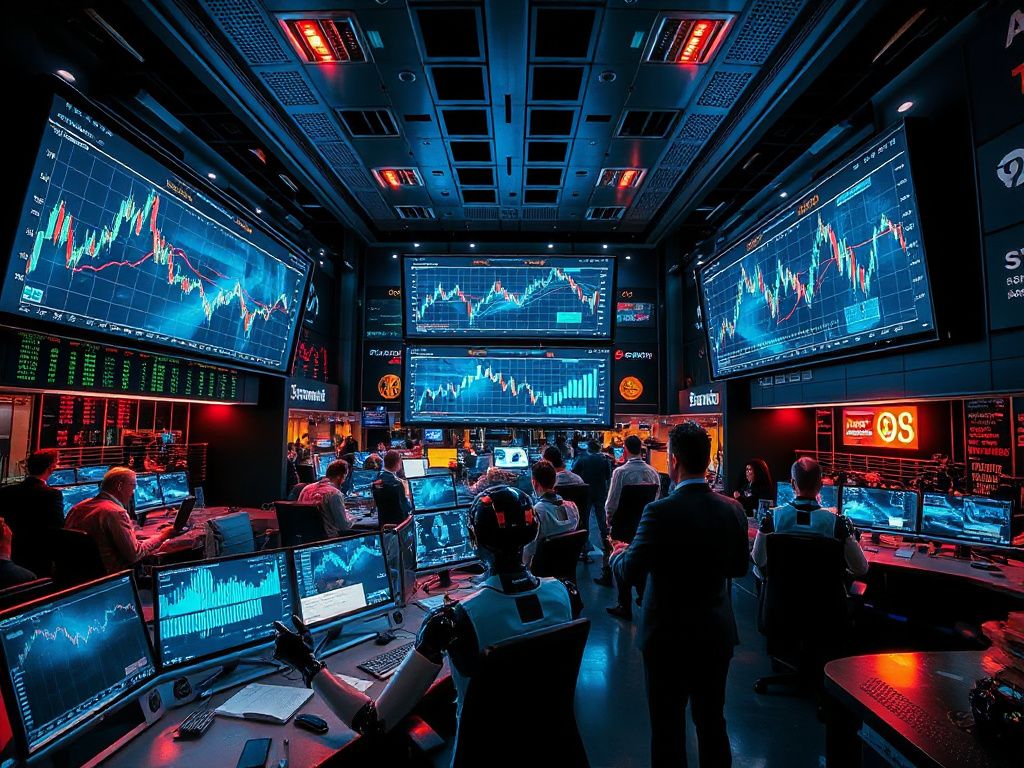
AI Trading Bots Gain Momentum in 2026
In 2026 the speed of data, market movements and execution has become a decisive competitive edge, pushing traders of all asset classes toward automation. Crypto markets now operate 24/7, stock markets react to earnings surprises and sector rotations, while the foreign‑exchange arena processes an estimated $9.6 trillion of OTC turnover each day, according to BIS data from April 2025. This relentless pace makes it impossible for a human to monitor every chart, news headline, or price discrepancy, and AI‑driven trading bots have emerged as the most practical solution. By continuously scanning multiple exchanges, applying rule‑based strategies and handling order execution in milliseconds, these bots can capture fleeting arbitrage windows, enforce disciplined risk limits and back‑test ideas against years of historical data—all without the emotional bias that often leads to panic selling or FOMO buying.
Key Players and Their Offerings
Several platforms have launched sophisticated AI trading solutions this year. DdbuShen announced a fully automated investment platform that combines quantitative AI models with embedded risk controls, allowing users to trade both cryptocurrencies and equities using pre‑configured rule sets. MoneyFlare introduced a 24/7 AI crypto trading bot that emphasizes a frictionless onboarding experience; users simply select a subscription plan and the system handles market analysis, trade execution and risk management in the background. Meanwhile, broader industry surveys, such as the AMBCrypto “11 Best Trading Bots in 2026” guide, highlight a growing ecosystem of bots that support stock, crypto and forex markets, offering features like grid trading, dollar‑cost averaging and signal‑based strategies. The convergence of these tools with major exchanges—evidenced by platforms like BingX processing over $670 million in futures grid bot allocations—demonstrates that automated trading is no longer a niche hobby but a mainstream component of modern portfolio management.
Risks, Regulation, and Best Practices
Despite their advantages, AI trading bots operate within a heavily scrutinized regulatory environment. The U.S. Commodity Futures Trading Commission (CFTC) has warned that AI cannot reliably predict sudden market shocks, and that many fraudsters exploit AI hype to sell “guaranteed‑return” schemes. FINRA echoes these concerns, emphasizing that investors should verify the provenance of any AI‑driven product and understand the underlying risk controls. Effective risk management therefore remains essential: users should set stop‑loss limits, diversify across strategies, and regularly review performance metrics through transparent dashboards. Selecting a bot with documented back‑testing results, real‑time monitoring, and clear compliance disclosures can mitigate exposure to unexpected volatility. As the market continues to evolve, the most successful traders will be those who blend AI’s speed and precision with disciplined oversight, ensuring that automation enhances—not replaces—sound investment judgment.