
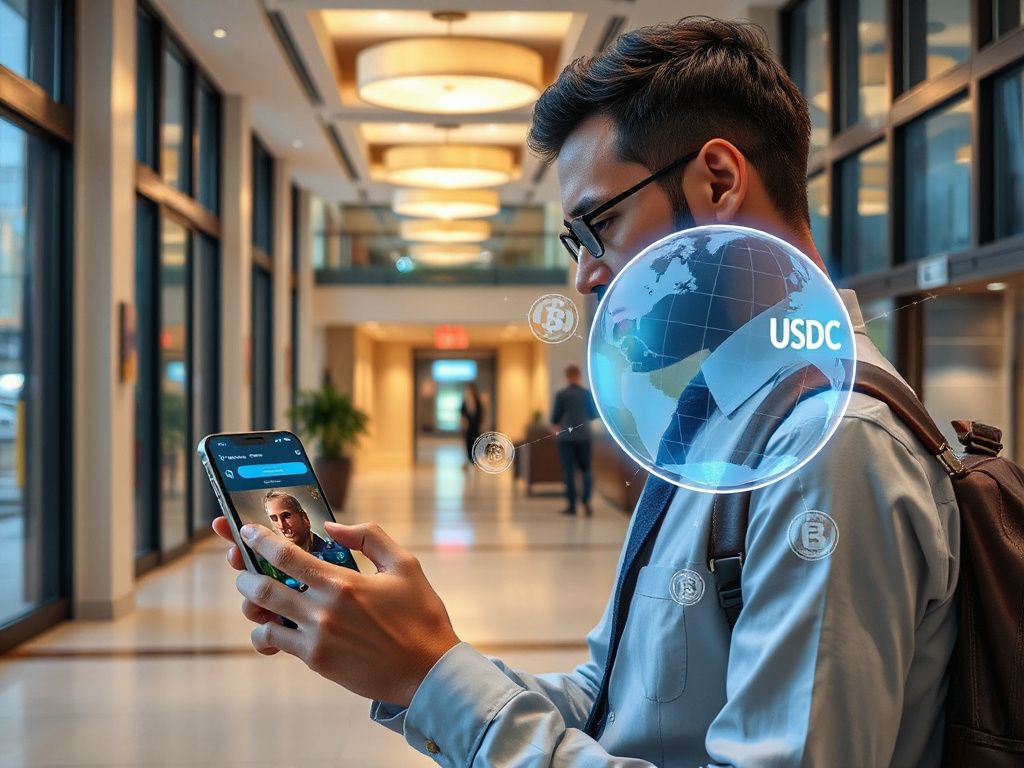
AI-Powered Hotel Booking Merges Crypto Payments with Real-World Travel
On June 6, 2026, Travala announced a groundbreaking integration that lets users search, reserve, and pay for hotels directly within a conversation with Claude, the advanced AI model from Anthropic. By embedding the entire booking workflow into a single chat interaction, the platform eliminates the traditional multi‑step process that often frustrates travelers. The solution leverages the Base blockchain and Coinbase’s x402 payment standard, enabling seamless stablecoin transactions—specifically USDC—without the need for fiat conversion. This fusion of conversational AI and blockchain infrastructure not only speeds up the user experience but also showcases the growing potential of agentic commerce, where autonomous agents can execute complex tasks such as travel reservations and real‑time payments on behalf of users.
Stablecoin Integration and the x402 Protocol Enable Secure, Instant Payments
The payment layer behind Travala’s new AI booking engine is built on the x402 protocol, a decentralized standard designed for fast, low‑fee transfers of stablecoins on the Ethereum‑compatible Base network. By using USDC, a widely adopted dollar‑pegged token, the platform ensures price stability while benefiting from the transparency and security of blockchain transactions. Users can authorize payments directly within the Claude chat, with the transaction recorded on‑chain, providing an immutable audit trail that enhances trust for both travelers and hospitality providers. This approach also reduces reliance on traditional payment processors, cutting down processing costs and eliminating cross‑border friction—a critical advantage for the global crypto‑savvy traveler community.
Implications for the Future of Agentic Commerce in Travel
The launch marks a significant milestone in the evolution of AI agents from purely digital assistants to active participants in real‑world commerce. By combining natural language processing, blockchain‑based stablecoin payments, and a robust smart‑contract framework, Travala demonstrates how travel can become the next frontier for agentic transactions. As public access is slated to roll out next week, the industry will watch closely to see how this model influences user adoption, regulatory perspectives, and competitive responses from traditional travel agencies. The seamless blend of AI-driven search, instant crypto payments, and decentralized infrastructure hints at a broader shift toward frictionless, decentralized travel ecosystems, where users enjoy greater control, privacy, and financial efficiency.