
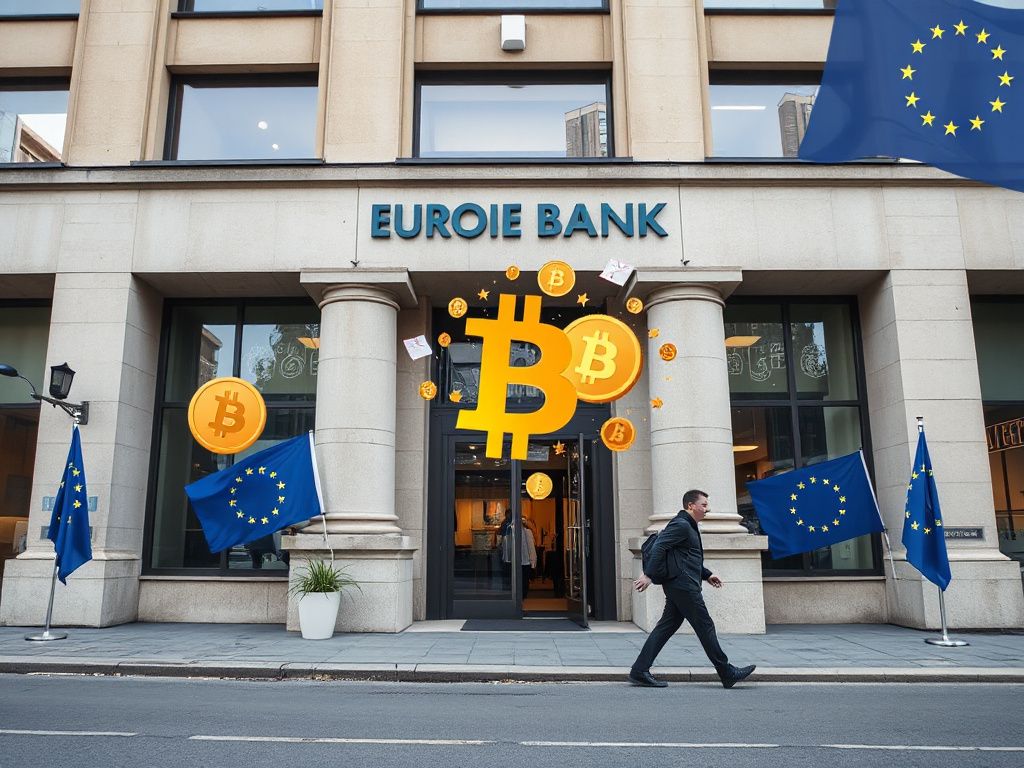
European Banks Face a Crypto‑Driven Customer Exodus Amid Tightening Regulations
Recent research from Boerse Stuttgart Digital reveals that more than a third of investors in Germany, Italy, Spain and France are ready to switch banks if their current institution cannot provide secure, regulated crypto‑asset services. The appetite is strongest in Spain, where the desire for integrated digital‑asset tools is reshaping expectations across retail and institutional clients. At the same time, the European Union’s Markets in Crypto‑Assets (MiCA) framework will be fully enforced on July 1, 2026, compelling any unlicensed exchange to cease operations in the EU or face fines up to €15 million. This regulatory push, combined with the OECD’s Crypto‑Asset Reporting Framework (CARF) that now requires 48 countries to collect transaction‑level data from crypto platforms, is creating a decisive inflection point: banks that fail to embed compliant crypto solutions risk losing a sizable share of their clientele to fintech rivals that already offer seamless on‑ramp and off‑ramp capabilities.
Across the Atlantic, the United States is moving from isolated enforcement actions to a coordinated oversight model. In March 2026 the SEC and CFTC signed a memorandum of understanding and released a five‑part token taxonomy to guide compliance, signaling that American banks will soon need robust AML/KYC frameworks for digital assets. Meanwhile, Asia is tightening its grip as South Korea fined Bithumb $24 million for AML breaches, and African markets are transitioning from outright bans to structured licensing regimes, exemplified by Nigeria’s new Securities Act and South Africa’s 300 approved crypto‑exchange licenses. These global trends are converging on a single narrative: the era of “unmonitored cross‑border trading” is ending, and financial institutions must adapt or be left behind.
Industry gatherings such as Paris Blockchain Week 2026 underscore the strategic importance of this transition. Attendees—from traditional finance executives to DeFi builders—debated custody architecture, real‑world asset (RWA) liquidity, and stablecoin infrastructure, all under the watchful eyes of policymakers. Notably, Russia announced a legal pathway to use Bitcoin for trade payments starting July 1, positioning the digital currency as a tool to circumvent sanctions. Coupled with soaring market interest—Bitcoin trading at $77,799, Ethereum at $2,311, and a 1.5 % rise in XRP—the momentum is clear: banks that integrate compliant crypto services will not only retain existing customers but also capture new revenue streams in a rapidly evolving financial landscape.