
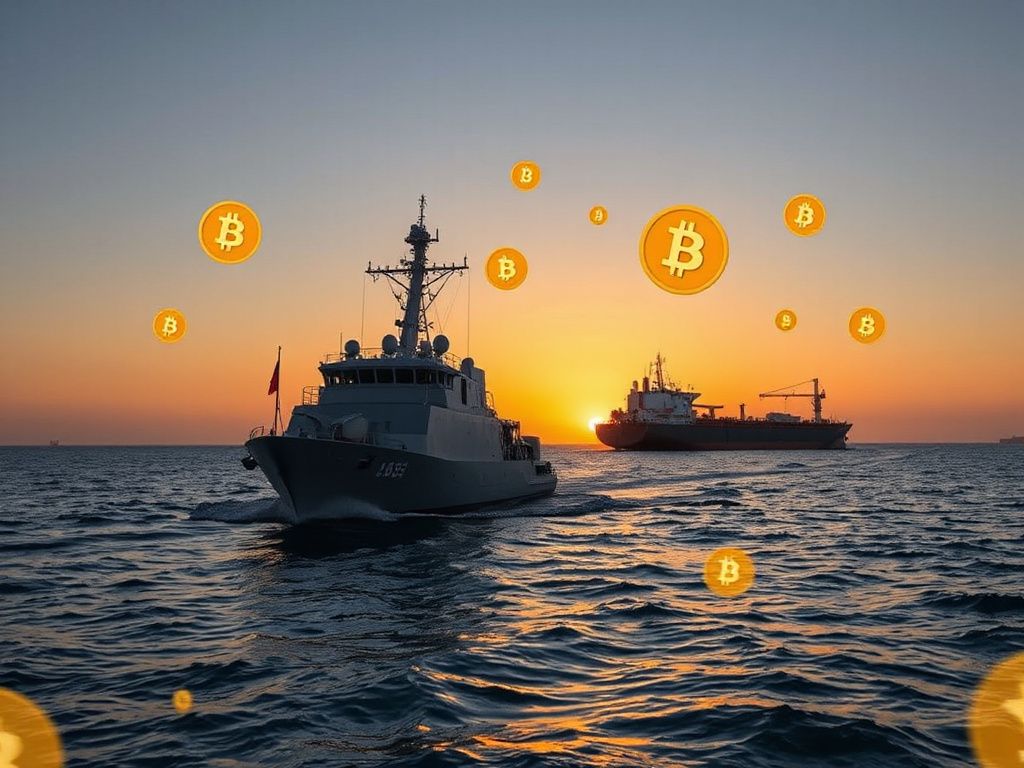
Iran’s New Crypto Toll System in the Strait of Hormuz
The Iranian navy has begun escorting foreign oil tankers through the strategic Strait of Hormuz in exchange for substantial fees paid not only in traditional Chinese yuan but also in cryptocurrencies such as Bitcoin. According to multiple shipping and news sources, vessels that wish to pass the narrow waterway must first clear a newly implemented “tollbooth” system, where payment is verified through encrypted blockchain transactions before the escort is granted. This approach allows Iran to bypass conventional banking channels that are often subject to international sanctions, while simultaneously generating hard‑currency revenue that can support its war‑time economy.
Crypto payments have quickly become a hedge against the heightened geopolitical risk surrounding the region. Market analysts note that during the escalation of the U.S.–Iran conflict, Bitcoin showed relative resilience compared with gold, the U.S. dollar, and major equity indices, which all experienced notable declines. The latest reports indicate that Bitcoin was trading around $69,750, reflecting a 4 % rise in a single day as traders sought a store of value amid the uncertainty. By accepting digital assets, Iran not only secures a fast, border‑less payment method but also positions itself to benefit from the potential upside of a cryptocurrency that is increasingly viewed as a war‑time safe haven.
The integration of both Chinese yuan and crypto into the toll collection process underscores Tehran’s broader strategy to diversify its foreign‑exchange inflows while maintaining control over a critical maritime chokepoint. Shipping companies, aware of the new cost structure, are now required to arrange payments through approved crypto wallets or yuan accounts before receiving naval escort. This dual‑currency model illustrates how modern financial technologies are reshaping traditional geopolitical tools, turning a centuries‑old shipping lane into a laboratory for digital‑currency‑driven revenue generation.